I'm our licensed realtor, an Illinois-licensed real estate agent. I represent Sell Chicago Properties on distressed-property listings, and a significant portion of those listings involve contract-assumption path structures. I have walked dozens of buyers through this process. Here is what I wish I had given all of them to read first.
I want to be clear about something before I start: creative financing is not a workaround or a trick. It is a set of legitimate contractual structures that have been used in Illinois real estate for decades, governed by statute and handled by licensed real estate attorneys every day. It is also a category where the vocabulary is frequently abused by people who don't actually do the deals - which is why most buyers walk into their first creative-financing conversation deeply confused. Let me fix that.
What contract-assumption path is, in plain English
At its core, a real estate assignment is the transfer of a buyer's contractual position - the rights and obligations under an existing purchase agreement - to a new buyer (the assignee) in exchange for a fee or agreed purchase price. The original buyer (the assignor) was already under contract with the seller. The new buyer steps into that contract rather than negotiating a new one from scratch.
In a distressed-property context, contract-assumption path typically means the original buyer - often an investment principal who sourced the deal - has a purchase agreement that includes flexible payment structures. Instead of requiring all cash at one closing, the PA allows for the acquisition to be completed through one of several mechanisms: full cash, subject-to existing financing, or an escrow holdback that bridges the gap between what's available today and what will be paid on a future timeline.
The "creative" in creative financing refers to those flexible structures. It does not mean unregulated, improvised, or risky by default. The structures are well-defined, the risks are known and manageable, and the legal framework in Illinois is mature. What makes them "creative" versus conventional is simply that they do not require the buyer to walk into a bank and qualify for a new mortgage to close the deal.
"Creative financing is not a loophole. It is a set of tools that have existed in real estate for decades, used daily by sophisticated buyers who want to deploy capital efficiently without qualifying for a new loan at every acquisition."
The three structures: full cash assignment, subject-to, and holdback escrow
Structure B1
Full Cash Assignment
The assignee pays the full purchase price in cash at assignment. All liens are cleared at closing: tax certificates, HELOCs, judgments. The assignee receives a clean title and a recorded warranty deed. This is functionally identical to a conventional cash purchase, except that the buyer is purchasing the contractual position rather than negotiating directly with the seller. Best for fix-and-flip buyers and 1031 exchange buyers who want clean title from day one.
Structure B2
Subject-To Existing Financing
The assignee takes title to the property subject to the seller's existing mortgage or HELOC remaining in place. The assignee does not qualify for a new loan - they simply begin making the payments on the existing note. This structure allows a buyer to acquire a property without a lending event, which is particularly valuable when interest rates are elevated or the buyer has capital they want to deploy across multiple deals simultaneously. The legal mechanism is a transfer of title with the existing mortgage surviving in the seller's name.
Structure B3
Holdback Escrow
The assignee pays an immediate cash component (often just the tax certificate or the most pressing lien) at assignment, with the remaining purchase funds held in an escrow account and released to the seller on a future schedule - typically tied to the buyer's refinance or resale timeline. This structure lets a buyer control a property and begin renovation or occupancy while they arrange permanent financing. Particularly effective for BRRRR-strategy investors who plan to refinance after renovation.
When each structure makes sense
Full cash: when you want the cleanest possible title fastest
Full cash assignment works best for buyers who have liquid capital and want a zero-complexity closing. Fix-and-flip investors working on a specific renovation timeline benefit most here: they close with clean title, begin renovation immediately, and resell on a known schedule. 1031 exchange buyers also favor this structure because the exchange rules require clean title transfers at specific deadlines - subject-to and holdback timelines can create exchange-clock complications. If you can pay all cash and want nothing complicated, this is your path.
Subject-to: when you want to scale without qualifying
Subject-to is the structure of choice for BRRRR-strategy investors and anyone deploying capital across multiple simultaneous acquisitions. The core benefit: you do not need to qualify for a new loan, which means you can close in the same week you identify the deal without waiting for a bank's underwriting process. For a buyer who owns five or ten rental properties and has a debt-service ratio that makes bank qualification slow or difficult, subject-to lets them keep scaling.
The key risk in subject-to is the due-on-sale clause. Nearly every conventional mortgage contains a clause stating that the lender may accelerate (call the full balance due immediately) if the property is transferred without their consent. In practice, lenders rarely exercise this clause if the payments continue arriving on time, but the risk is real and the buyer needs to understand it going in. A real estate attorney experienced in subject-to transactions in Illinois is not optional on this structure.
Holdback escrow: when you need time to arrange permanent financing
Holdback escrow is the most flexible of the three structures and the one that most closely resembles "owning a house you haven't fully paid for yet." The buyer takes possession and control, begins renovation if applicable, and then brings the permanent financing together over the following weeks or months. The seller's remaining equity sits in an attorney-managed escrow account and is disbursed per the agreed schedule.
This structure is common in distressed-property transactions where the immediate priority is clearing a time-sensitive lien (a tax certificate, for example, with a redemption deadline) while giving the buyer time to arrange long-term financing. It is also the structure that most cleanly accommodates the 8936 Charrington Path B transaction described below.
The Illinois legal framework
Creative-financing assignment in Illinois sits at the intersection of two primary statutory frameworks. Understanding both matters before you put pen to paper on any creative deal.
225 ILCS 454: The Illinois Real Estate License Act of 2000
The Illinois Real Estate License Act of 2000, 225 ILCS 454, governs how licensed agents may and may not participate in assignment transactions. The key provisions for buyers to understand:
- Any person or company compensated for brokering a real estate assignment in Illinois is required to hold a valid Illinois real estate license unless an exemption applies. The principal party to a transaction (the assignor who is selling their own contractual interest) is not required to hold a license; the person who represents them for compensation is.
- Written brokerage agreements are required whenever a licensed agent represents a buyer or seller in a transaction involving compensation. If an agent tells you they don't need a written agreement, that's a red flag.
- Disclosure of the agent's role - listing agent versus buyer's agent versus dual agent - is mandatory in writing before any substantive negotiation. I am the listing agent on 8936 Charrington Drive. I disclose that in writing to every buyer I speak with.
765 ILCS 5: The Conveyances Act
The transfer of real property interests in Illinois - including warranty deeds, quitclaim deeds, and assignments of purchaser's interests - is governed by the Illinois Conveyances Act, 765 ILCS 5. Key provisions that directly affect creative-financing structures:
- A warranty deed executed and notarized before conveyance is the standard instrument for transferring title with full covenants (the seller warrants against all title defects). In a distressed-property assignment, confirming that the seller has executed a warranty deed - not a quitclaim deed - before your money changes hands is a basic protection most buyers overlook.
- Assignments of contract rights (the buyer's position under a PA) are generally enforceable in Illinois as long as the original PA does not contain an anti-assignment clause. Standard assignment-friendly PA language should be confirmed by your attorney before you close.
- Recording the deed with the county recorder as soon as possible after closing is critical. An unrecorded deed is valid between the parties but creates priority risk if the seller subsequently encumbers the property.
What buyers almost always get wrong
After walking through creative-financing deals with dozens of buyers in Will County and SW Cook County, here are the mistakes I see repeatedly:
Mistake 1: Treating "subject-to" as equivalent to a conventional cash deal
Subject-to buyers take title, but they do not eliminate the existing mortgage. The note stays in the seller's name. This creates three distinct risks that need to be accounted for: the due-on-sale clause (described above), the seller's credit risk (if the seller files bankruptcy, the mortgage could be treated as a debt of the estate), and insurance complications (the property needs to be insured in the buyer's name as the owner while the existing mortgage insures the lender's interest). Each of these risks is manageable with proper structuring. None of them is automatically fatal to the deal. All of them need to be on the table with your attorney before you close.
Mistake 2: Assuming holdback escrow means delayed risk for the seller
Buyers sometimes assume that because the seller's funds sit in escrow for weeks or months, the seller is taking the risk during that period. In a well-structured holdback, the reverse is true: the seller's remaining equity is secured in a third-party escrow account managed by a licensed attorney, and the buyer takes possession and control of the property from day one. The seller's risk during the holdback period is that the buyer doesn't perform on the escrow schedule - which is why holdback agreements need penalty provisions, timeline specificity, and attorney review on both sides.
Mistake 3: Skipping the attorney because "the agent explained everything"
I am a licensed Illinois real estate agent. I am not your attorney. I can explain how these structures work, I can walk you through the deal terms, and I can tell you what I've seen in practice. I cannot give you legal advice, and I will not try to substitute for proper legal review of your purchase agreement. The ARDC's public lawyer search is the fastest way to find a licensed Illinois attorney with real estate experience. Bring one to every creative-financing deal. I will encourage it every time.
Mistake 4: Conflating the assignment price with the all-in cost
The assignment price is what you pay to step into the contract. The all-in cost includes: the assignment price, any liens cleared at closing, attorney fees, title and closing fees, and any renovation costs you're planning to incur post-close. All of those numbers need to be on your underwriting spreadsheet before you submit an offer. For the current 8936 Charrington listing, the public buyer-facing position is simple: $549,000 for the cash path and $549,000 for the contract-assumption path. Specific payoff, possession, title, credit, and timing details belong in attorney and title-company review, not in a public payoff table.
The role of the listing agent versus the buyer's attorney
In a contract-assumption path transaction, the listing agent (me, in this case) and the buyer's attorney serve different and complementary roles that should not be confused.
The listing agent represents the seller's principal. My job is to market the property, facilitate showings, communicate deal terms, and coordinate the transaction through closing. I have a legal obligation of disclosure to all parties under 225 ILCS 454, which means I will tell you the material facts about the property and the transaction structure - I won't shade them to close a deal. But I am not your advocate. My client is the seller.
The buyer's attorney is your advocate. They review the purchase agreement, confirm the title search, verify the lien payoffs, structure the holdback or subject-to language to protect you, and advise you on the due-on-sale risk if you're doing a subject-to deal. In Illinois, attorney review is standard on residential real estate transactions - the Illinois REALTORS association's standard contract forms include an attorney-review period for this reason. For a creative-financing transaction, attorney review is not optional. It is the minimum baseline for a buyer acting in their own interest.
Risks and protections: what a well-structured deal looks like
Due-on-sale clause (subject-to deals)
- Risk: Lender accelerates the existing mortgage when they discover the title transfer.
- Protection: Most lenders don't accelerate as long as payments arrive on time. Structure the deal so you have capital reserves to pay off the existing note if acceleration occurs. Your attorney should review the existing mortgage documents for any non-standard acceleration language before you close.
Holdback release risk
- Risk: You pay the immediate cash component, take possession, and the seller disputes the holdback release on the scheduled payment date.
- Protection: The holdback escrow is held by a neutral third-party attorney, not by either party directly. The release conditions - what triggers each disbursement - must be spelled out in writing with objective milestones (e.g., "recording of the deed" or "delivery of keys" or "lender confirmation of refinance proceeds"). Vague holdback language is dangerous for both sides.
Title defects in distressed-property transactions
- Risk: A distressed property may carry unknown liens, judgments, or title clouds that are not disclosed before closing.
- Protection: Always require a title commitment from a licensed Illinois title company before closing. The commitment will identify all known liens and encumbrances. Confirm that the closing is being conducted by or through a licensed title agent and that the title company will issue an owner's policy at closing. On the 8936 Charrington transaction, the title work was completed before listing, which is one of the deal's stated advantages.
Real example: 8936 Charrington's contract-assumption path
The property I'm currently representing, 8936 Charrington Drive in Frankfort, is currently offered at $549,000 for a cash purchase or $549,000 for a contract-assumption path. The public listing keeps the buyer-facing structure simple: price, condition, CMA, timeline, possession expectations, and professional-review boundaries.
Qualified buyers can request the underlying contract materials, title information, payoff timing, possession documents, and credit language for attorney and title-company review. The important public point is not a menu of financing substructures. It is that the same $549,000 price is available through either path, while the contract-assumption path requires buyer sophistication, proof of funds, and professional review.
The buyer's attorney should confirm the existing agreement, title status, payoff timing, possession schedule, and any credit language before the buyer relies on it. The property page links to the live CMA and showing schedule rather than publishing document-level payoff details in public copy.
For context on the property's market position and subdivision, see our related guide: Frankfort Off-Market Homes: What Buyers Need to Know.
Live example · Path B contract assumption
8936 Charrington Drive · Frankfort, IL 60423
4 BR / 3.5 BA · 2,384 sqft · 0.32-acre lot · Lincoln-Way East feeder. Same-street comp $623,500. Path A: $549,000 cash. Path B: $549,000 contract assumption. Qualified buyers can review the contract, title, payoff timing, possession schedule, and credit language with counsel and title before closing.
See the full deal structure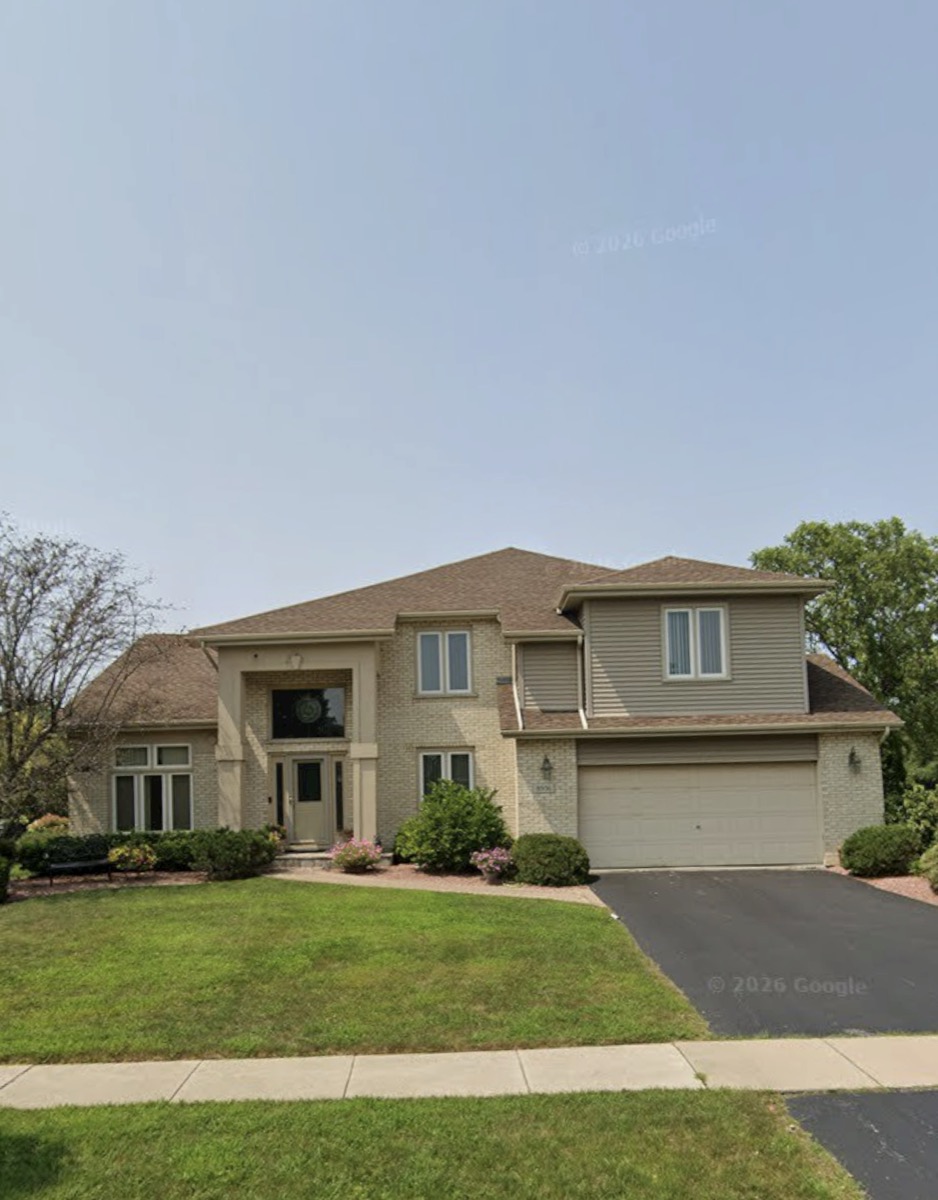

I work with off-market, distressed, and creative-financing properties across SW Cook County and Will County, Illinois. I represent Sell Chicago Properties as their listing agent on dispositions; I also work with buyer-only clients under a written brokerage agreement. Member, Illinois REALTORS. Visit my site: mfvrealestate.com.