
Creative financing has become a common phrase in real estate circles - and like most common phrases, it covers a wide range of situations, from well-structured deals with multiple layers of buyer protection to loosely assembled arrangements that carry real risk. The difference between those two isn't always obvious from the outside.
This guide is about how to tell them apart. Below are seven things to look for when evaluating any creative-financing deal. These aren't abstract principles - they're specific, documentable features that professional deal structures include as standard practice. If a deal you're looking at has all seven, you're in good shape. If it's missing several, that's worth understanding before you commit.
At the end of the article, there's one current listing - 8936 Charrington Drive in Frankfort, IL - that checks every criterion on this list. We'll walk through it as a concrete example of what these features look like in a real transaction.
8936 Charrington Drive, Frankfort IL. Same-street comp: $623,500. Path A: $549,000 cash. Path B: $549,000 contract assumption.
Look for: A seller with a real reason, not a desperate one
Criterion 1 of 7
Seller motivation matters - and the type of motivation tells you a lot
Tax-transition dispositions, estate settlements, and out-of-state relocations are clean motivations. The seller has a defined reason to move and a defined timeline. That's different from a seller trying to liquidate ahead of foreclosure, where the pressure is so high that corners may have been cut along the way. Clean motivation doesn't mean low urgency - it means the urgency has a clear cause that you can verify.
Ask the listing agent directly: why is this selling now, and through this structure? If the answer is vague, that's worth noting. A professional deal will have a clear, articulable answer.
Look for: An executed warranty deed already in escrow
Criterion 2 of 7
The seller's most important obligation should be locked in before you commit a dollar
If the seller hasn't pre-signed the deed, you have signing risk - the deal depends on the seller showing up and cooperating at closing. If they've already signed in front of a notary and the deed is sitting at the title company, that risk is gone. The transfer of title is contractually done; closing just records what's already agreed.
A warranty deed - not a quitclaim - matters here. A warranty deed carries full covenants against title defects. A quitclaim transfers whatever interest the seller has, with no guarantees. In a properly structured deal, you want the warranty.
Look for: A title commitment, not a title promise
Criterion 3 of 7
A real deal has title work done. An incomplete deal says it'll happen later.
A title commitment means the title company has already done the full search - every lien, judgment, and encumbrance identified - and has issued a binder committing to insure title at closing. That search takes time and money. A seller who has already paid for it is signaling they're serious. A deal where title work is promised for after you're under contract is a deal where you may discover problems after you're already committed.
A good deal will be able to hand you a title commitment before you sign anything. If the lien stack is complicated - tax certificates, existing mortgages, court judgments - it should be fully disclosed and quantified, not buried in footnotes.

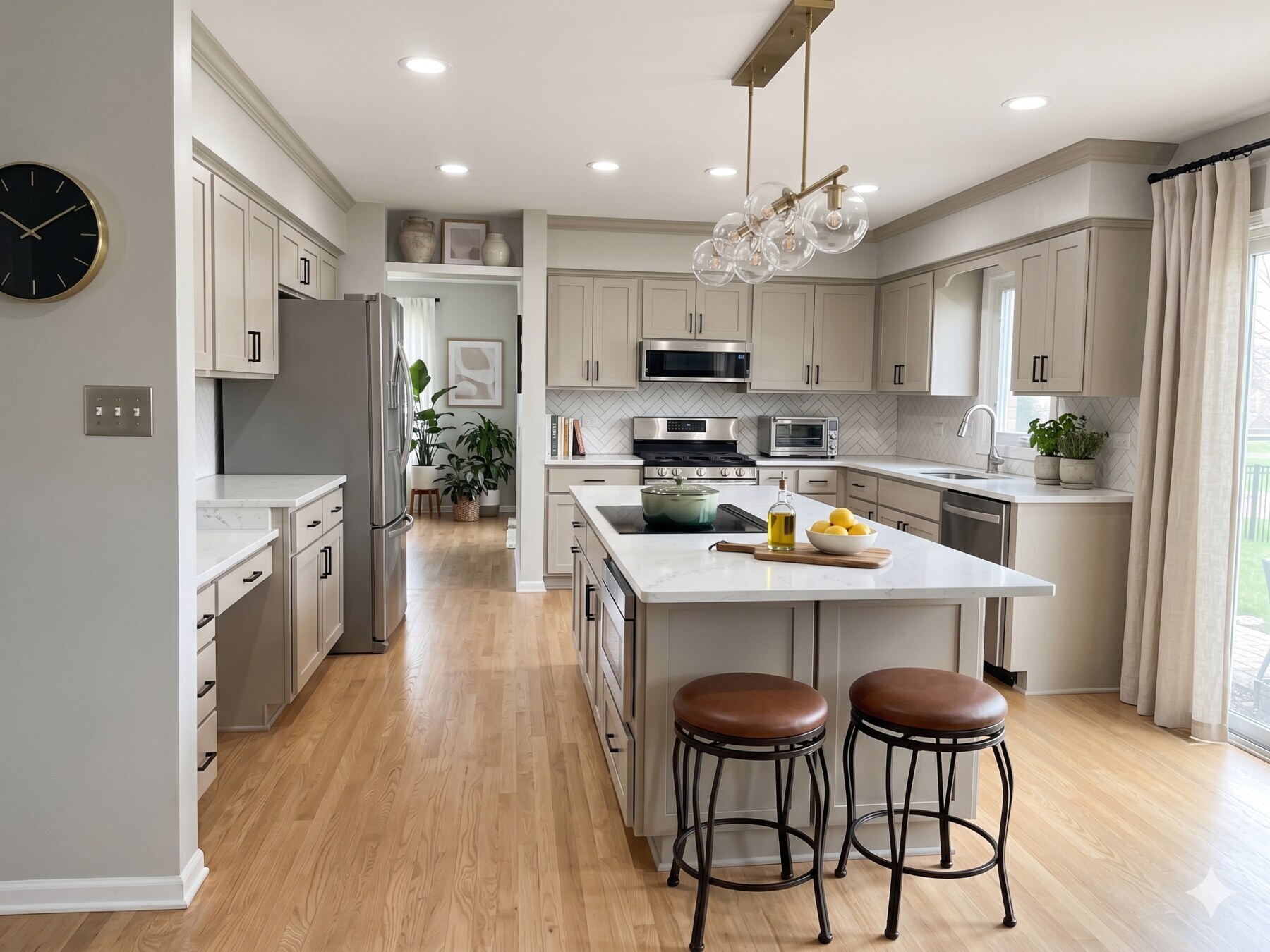
Family room at 8936 Charrington Drive. Cathedral ceiling and brick fireplace are existing features - no renovation required here to support the $610,000 ARV case.
Look for: Bonded possession, not a handshake
Criterion 4 of 7
The seller's move-out obligation should have real financial teeth behind it
In deals where the seller is still occupying the property at closing, possession delivery is one of the most common points of friction. A well-structured agreement addresses this directly: a written possession schedule with a specific move-out date and a daily liquidated-damages penalty against the seller for every day past that date. That penalty comes out of escrow - the seller's money on the table - not out of a future lawsuit you'd have to fund yourself.
The best structures also include a pre-consented possession order that triggers automatically if the seller remains past the deadline. You don't have to initiate new litigation. The mechanism is already written into the agreement.
Look for: Three or more financing options pre-built into the agreement
Criterion 5 of 7
Flex options in writing mean the seller has authorized multiple paths - not just the one that benefits them
The most buyer-friendly creative-financing deals give you choices. Full cash. Subject-to existing financing (you take title while the seller's mortgage stays in place - no new loan qualifying required). Holdback escrow (you pay a portion now and the balance releases to the seller when conditions are met). When all three are built into the original agreement and authorized in writing by the seller, you have flexibility to choose the structure that fits your situation at closing.
A deal that only allows one path - typically full cash - isn't creative financing. A deal where the seller has pre-authorized multiple structures is the real thing.
Look for: A clear math story
Criterion 6 of 7
If you can't see where the equity is, ask until you can
Every good deal has a simple math story: acquisition price plus any rehab costs equals your all-in basis. Then ARV - after-repair value - based on real closed comps, ideally same-street or same-subdivision comps. The gap between your basis and the ARV is your equity position. If that gap doesn't make sense for the risk you're taking on, the deal isn't for you. That's not a judgment on the deal - it's just a judgment on fit.
The strongest comp possible is same-street. It controls for the subdivision premium, the school district, and the lot size range all at once. One solid same-street comp beats ten zip-code-level estimates.
Look for: Attorney fees paid from closing disbursement, not from your pocket
Criterion 7 of 7
Who absorbs the legal cost tells you who built the deal
In deals where the seller has retained an attorney and those fees are paid from the closing proceeds, the seller is signaling something important: they own the process. They hired the attorney. They structured the documentation. They're not asking you to pay for the legal work before you know whether the deal closes. That's a meaningful distinction from deals where the buyer is expected to fund attorneys on both sides out of pocket before anything is confirmed.
Regardless of who pays what, always bring your own attorney to review any creative-financing agreement before you sign. This is standard practice in Illinois residential transactions and should not be waived.
7
Evaluation criteria
3
Buyer review paths
5/5
Lincoln-Way East school rating
A deal that checks every box: 8936 Charrington Drive, Frankfort IL
Open House · Saturday May 30 · 10am - 1pmHere's how a current listing holds up against each criterion above. This isn't the point of the article - the criteria are useful for evaluating any creative-financing deal, not just this one. But a concrete example is more useful than an abstract checklist, so here it is.
The property. 4 bedrooms, 3.5 bathrooms - three full baths and one half bath. 2,384 square feet on a 0.32-acre lot. Built 1996. Cathedral ceiling in the family room, original brick fireplace, entertainer's patio. Frankfort 157-C elementary feeder through Chelsea Elementary and Hickory Creek Middle, then Lincoln-Way East High School. Lincoln-Way East carries a 5/5 rating, and that school premium is consistent across market cycles - end-users and investors alike pay for it.
The comp. 8969 Charrington Drive in the same subdivision closed at $623,500 in May 2026. That's the same street, same subdivision, controlling for every neighborhood variable. 8936 Charrington asks $549,000 cash (Path A) or $549,000 contract assumption (Path B). It also has one more bathroom than the $623,500 comp.
The math. A $35,000 cosmetic refresh - cabinet refinishing, hardware updates, vanity work, selective floor refresh - supports a projected ARV of $610,000. The structural elements are sound: roof, mechanical, foundation, and framing don't need to be touched. Net of the cosmetic scope, the equity creation position at close is meaningful before any market appreciation.
The financing paths. Path A is a $549,000 cash purchase. Path B is a $549,000 contract-assumption path for qualified buyers who can review the existing agreement, title posture, payoff timing, possession schedule, and any credit language with counsel and title before closing. The public listing keeps document-level payoff details inside the showing and diligence process so serious buyers can review the actual records with professionals.
| Item | Current figure | Buyer note |
|---|---|---|
| Public list price | $549,000 | Same price for cash purchase or contract-assumption path |
| Same-street comp | $623,500 | Closed May 2026 at 8969 Charrington Drive |
| Zestimate context | $573,400 | Noted on the property page as of May 25, 2026 |
| Cosmetic refresh estimate | $35,000 | Buyer-controlled finish scope |
| Conservative ARV range | $580,000 to $610,000 | Buyer to verify independently |
How the criteria apply. The seller's motivation is a tax-transition estate disposition with a defined timeline. The warranty deed, title commitment, payoff timing, possession schedule, and any credit language should be reviewed by the buyer's attorney and the title company before the buyer relies on the contract-assumption path. The public listing keeps the math clear while keeping document-level underwriting inside the diligence process.
Current listing · Will County · Frankfort IL
8936 Charrington Drive · Frankfort, IL 60423
4 BR · 3.5 BA · 2,384 sqft · 0.32-acre lot · Lincoln-Way East 5/5 feeder. Same-street comp $623,500 (May 2026). Path A: $549,000 cash, close June 2. Path B: $549,000 contract assumption. Open house Saturday May 30, 10am - 1pm.
View the listing View on MLS (BHHS Chicago)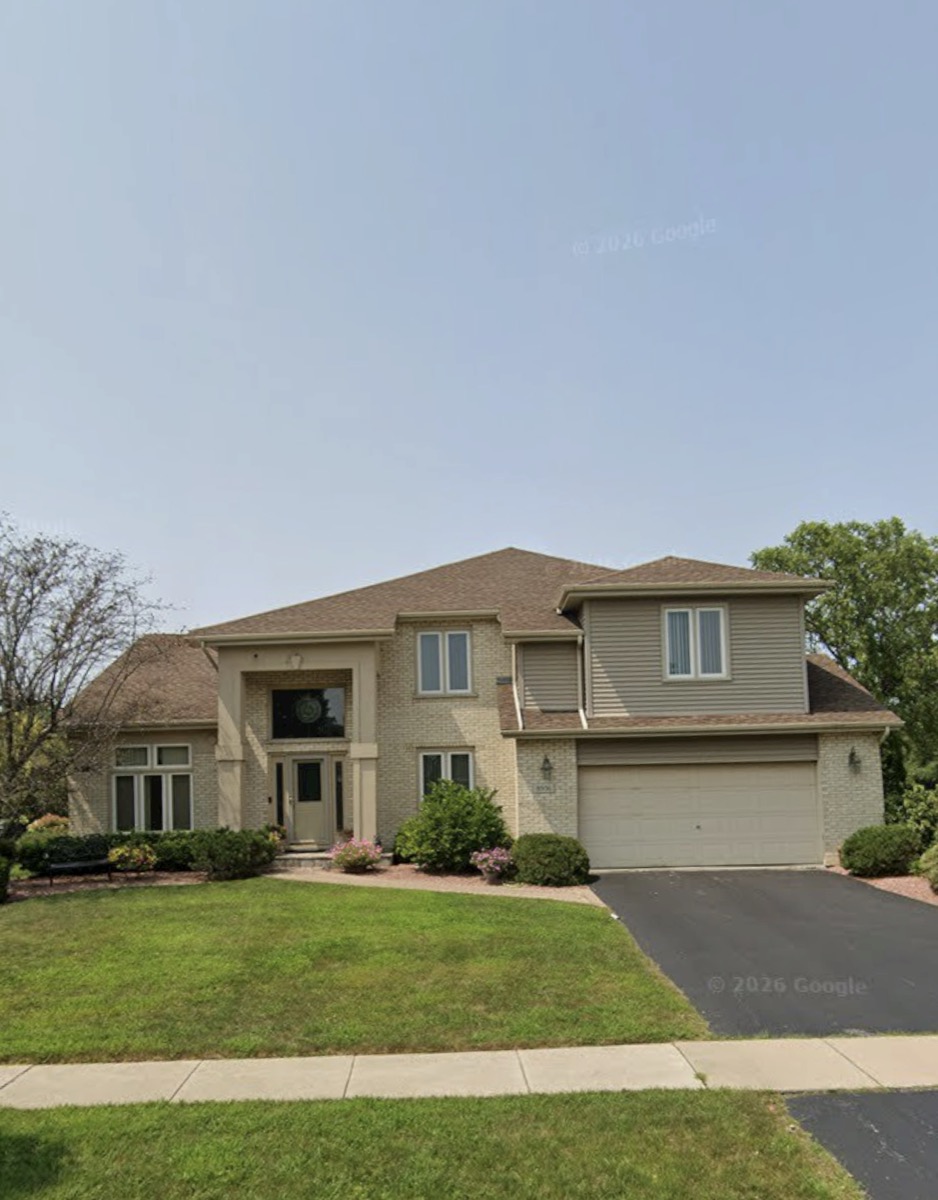
Five frequently asked questions
What is the most important thing to look for in a creative-financing deal?
A pre-executed warranty deed already held in escrow. If the seller has signed and notarized the deed before any buyer money changes hands, title transfer is contractually locked. That single factor eliminates more risk than almost anything else. For more on the full structure, see the companion piece: Creative Financing Assignment in Illinois - Subject-To, Holdback Escrow Explained.
Is creative financing legal in Illinois?
Yes. Assignment of contract, subject-to financing, and holdback escrow are well-established real estate structures in Illinois. They require a licensed Illinois agent and a real estate attorney to execute properly. Buyers should always retain independent counsel to review the agreement before committing funds. For more context on the legal framework, see the companion guide linked above.
What is a holdback escrow and how does it protect the buyer?
A holdback escrow is an attorney-managed account that holds the seller's remaining equity and releases it only when defined, objective conditions are met - vacancy by a stated deadline, delivery of keys, absence of new encumbrances. Because the escrow agent - not the seller - controls disbursement, the buyer's capital is never paid against unmet obligations. A well-structured holdback also carries a daily penalty if the seller's move-out slips. On the current 8936 Charrington listing, that penalty is $618 per day past July 23.
Who is subject-to financing best suited for?
Subject-to financing is generally best suited for sophisticated investors who understand title transfer, existing debt documents, insurance, reserve planning, and due-on-sale risk. On the current 8936 Charrington listing, the public offer structure is intentionally simpler: $549,000 cash path or $549,000 contract-assumption path, with document-level details reviewed by the buyer's attorney and the title company before reliance. For more detail, see the full technical walk-through.
How does 8936 Charrington compare to the same-street comp, and what does the ARV look like?
8969 Charrington Drive, the same-street comparable, closed at $623,500 in May 2026. 8936 Charrington Drive lists at $549,000 cash (Path A) or $549,000 contract assumption (Path B) - and it has one more bathroom than the $623,500 comp. After a $35,000 cosmetic refresh, the projected ARV is $610,000. The property has 2,384 square feet on a 0.32-acre lot, feeds into Lincoln-Way East High School (5/5), and the Will County tax certificate is paid at closing on June 2. View the full listing. Also available on the BHHS Chicago MLS listing.

our realtor works with off-market, distressed, and creative-financing properties across SW Cook County and Will County, Illinois, representing Sell Chicago Properties as listing agent on dispositions. She also works with buyer-only clients under a written brokerage agreement. Member, Illinois REALTORS. Visit mfvrealestate.com for current inventory and guides.
Text (312) 771-8835 with the path you're considering - our realtor reads every text personally and replies within an hour during business hours. This is not legal or investment advice. Buyers should retain independent counsel before committing to any transaction.